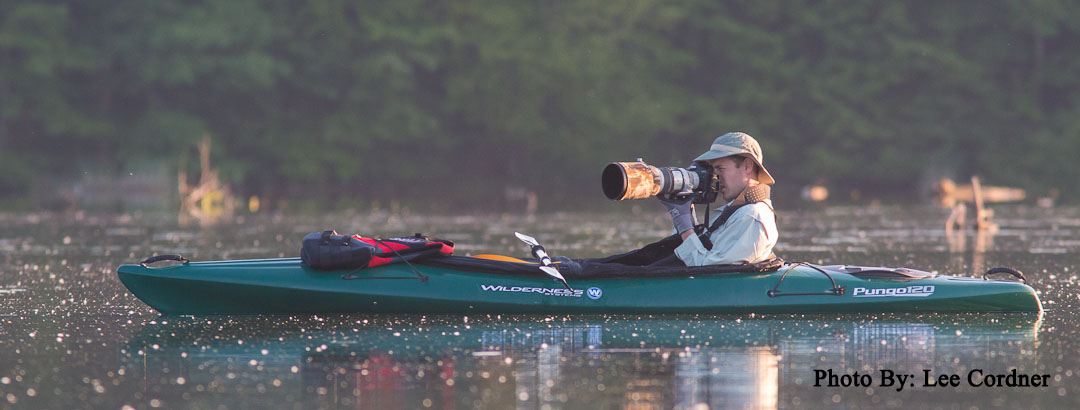
This is what a photographer in a kayak looks like. In case you were wondering. This one is Chris R. White …another Vermonter.
I came across a thread on the Photography-on-the-net forums showcasing images taken from a kayak. As a wildlife photographer I was instantly struck by how every image was nearly eye-level with the subject. And as I looked further into what it was like to take photos from a kayak it became clear that one could also get closer to the animals because most predators do not float on water.
Par for the course for me is to do an obnoxious amount of research for a few days on anything I want to buy. When it came to a kayak I went beyond my normal obnoxiousness by expanding things a few weeks, and even getting off the Internet. I visited every kayak retailer within 10 miles of my house. Do you know how many of those there are in outdoorsman Vermont? I tested one of my friend’s Wilderness Systems Pungo model out to discover that there is no way to avoid paddle drip on your lap. I didn’t take a camera into any of these boat tests and I’m glad I didn’t!
My goal was to get the Canon 600mm f4L IS into the boat with me. Despite the awkwardness of carrying, and attention this lens attracts in public, I would have found no kayak acceptable. It takes special rigging to get a stability system capable of handling that lens into just about any kayak.
My better half was interested in taking on the kayak endeavor as well, but she wasn’t interested in paddling. All she wanted was the ability to carry cold beverages and the kids. That led me to what I think is the perfect solution…
…the Hobie Mirage Kayak
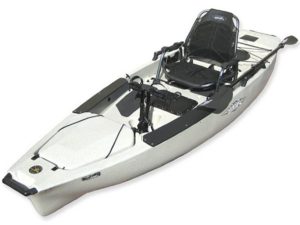 Because this was going to be a Vermont-use kayak I had heard you get more annual usage out of a kayak you sit in. The thought is you’re more shrouded from the wind and cold. Although I liked the idea of being inside a vessel the appeal of a sit on top kayak came in the peddle drive system. Why is that? Let’s look at the boat checklist for a wildlife photographer:
Stability
- Tracks well (goes in a straight line)
- Doesn’t get a lot of water on your gear
- Can hold your gear
- Easy to paddle/peddle while holding your camera in a ready position
- Can get into shallow water
- Can be camouflaged or come in a “quiet” color (you don’t want an orange kayak for example)
- Comfortable seating
- Bonus: can place a tripod in a position that still allows for easy paddling
- Bonus #2: stores beer
The Hobie Mirage system puts peddles beneath your feet and a rudder in your hand. Pair that with incredible stability and you have a kayak that tracks well, only lets the water in on wavy/windy days, and requires the same endurance as a bicycle. Depending on the length of the Hobie you go for the tracking can be different and the seats vary per model along with the amount of gear they can hold.
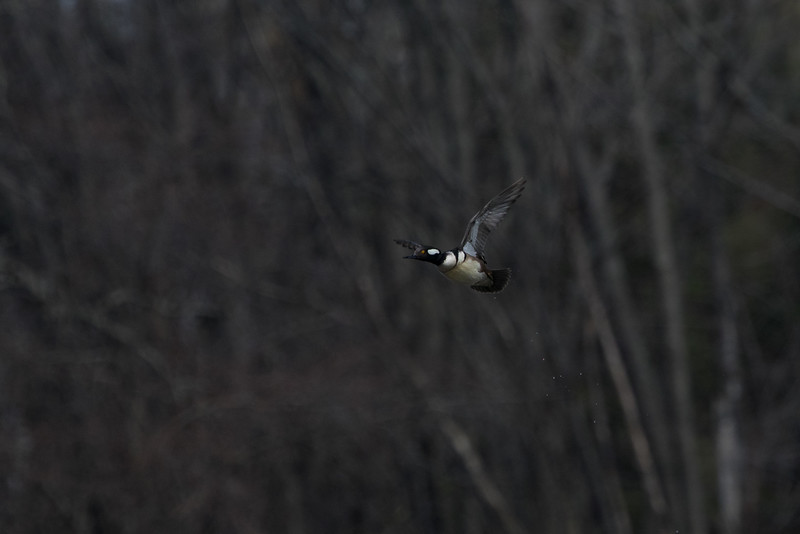
Male hooded merganser taking flight. I think I scared him.
The negatives are… Well, let me get this out of the way first. First off, you may not find a sit on top meets your needs. This would be especially true if you’re going to be trying to make incredibly long voyages across the ocean. Because I stick to ponds, lakes, and rivers my negatives are more about the Hobie’s usefulness when handling a camera. The peddle system is the primary reason to buy this boat, but you are not totally hands free when needing to steer it. This is a drawback, but not a large one. My other negative stems from the fact that my ingenuity is not strong enough to figure out how to get a decent stability system in place for my massive 600mm lens yet. I’m still working on that. In the meantime I’m using a more hand-holdable lens and will speak more to that later.
If you’re planning to head up or down “sketchy” (A.K.A. shallow and rocky) rivers for camping trips, this is not the boat to get. I also wouldn’t want to have to wheel this heavy Goliath on long trails full of bumpy things too often.
The overwhelming positives being with the ability to be stable and quiet while maintaining hours of comfort. The peddle system takes far less energy to use than paddling. Because you’re using leg muscles your endurance goes further and this definitely adds to your comfort level. With your paddling system being underwater you’re not dripping water into the boat and not making any sudden or mistaken splashes with an oar. That frightens wildlife and can get your gear wet. Even though one of your hands is needed for steering you still have a free hand to hold your camera whereas you need two hands to row in other kayaks.
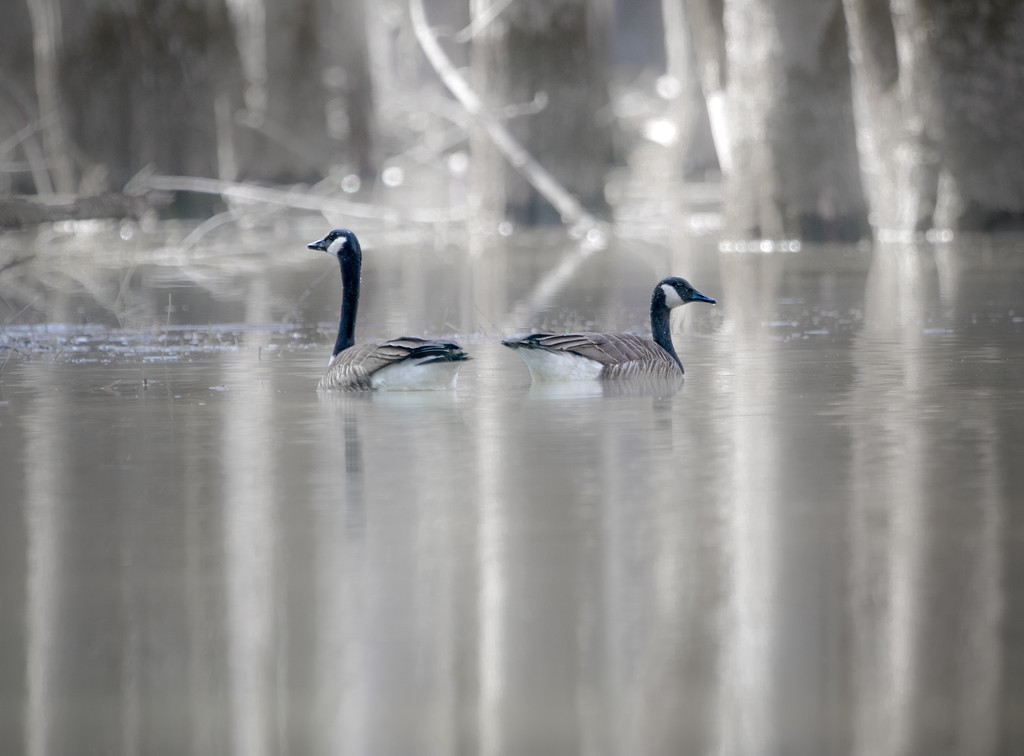
A light reflection from a submerged maple splits the scene between some geese
Hobie Pro Angler 12
I use a fishing kayak. Fishing kayaks are excellent photography platforms because they’re usually super stable, can hold a lot of gear, and track decently. Fishermen like to either stay in one spot or ride the current in the same places, so good tracking is important to them. They also need stability so they can stand up and/or feel comfortable casting a line. Photographers benefit from all of this well, and I’m a massive fan of my Pro Angler for all these reasons.
My favorite part of the Pro Angler is the chair. It has numerous seating positions and can double as a river side “beach chair” if I ever want to take a land break. Secondly, I have not been able to tip this boat over. Admittedly, I haven’t tried to capsize it, but I have used it as a diving board off all sides and find this boat so stable that reentry can be done from many different angles. The biggest chop I have had it in is about 1.5 feet boat wake on a windy day in the Waterbury Reservoir. With a lot of power boats pulling skiers and tubes the reservoir bounces their wake multiple times and the wind sprays it in your face. I was surprised at how little the spray got on me, but on days like that you don’t break out the camera gear until you find a calmer spot.
This heron was stalking lunch while I was stalking the heron
My 200+lbs makes it so the shallowest water I can get through at somewhere around 6 inches. You have to pull the peddle drive out and rudder up, but you can paddle yourself through some shallow water.
Storage-wise, there is ample room behind the seat with bungies to tie things down. There is a large compartment at the bow that I use to store ropes and life preservers (for myself, son, and dog). That compartment was designed as a live well for keeping your fish “on ice.” I think you can pull the live well out to get even more storage. There are two dry storage spots, but I only use the one in front of the seat. It can hold a SLR body with up to a medium-sized lens attached inside a dry bag.
On the rear storage deck is where I can carry my 6 old son or 40lb dog when we’re “family kayaking.” When I’m out shooting I carry two large dry bags and a small cooler. One dry bag will have a change of clothes or another layer for warmth and the other is typically a camera body mounted to a large lens that is too big to fit in the compartment under my knees. And the cooler…well, beer of course!
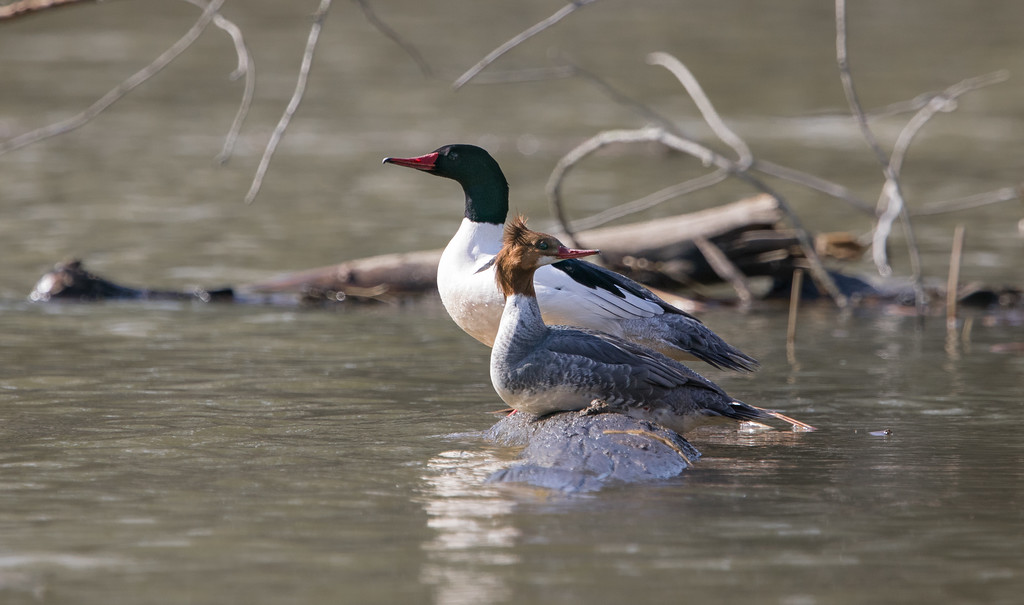
A pair of Mergansers resting after courtship on the La Platte River
Photography from the Pro Angler 12
At the beginning of this article I mentioned that I wanted to be able to shoot with a Canon 600mm f4L IS lens from this kayak and that is true. To this day I still have not put the effort into creating a specialized stability system for that lens in this boat. I don’t know if I will ever get around to it though. There are three reasons one uses a kayak for photography:
- Finding wildlife is easier from the water
- You can get closer to wildlife from the water because there are few water predators
- Your shooting height is nearly perfect for matching eye-level with your subject
Because you can get closer I am finding 400mm to be quite excellent and sometimes too long for most of what I’m shooting. 400mm also comes in very hand-holdable sized packages that are an absolute necessity for capturing birds in flight while on a boat.
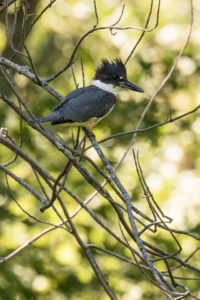
Chasing this kingfisher down required a kayak and all the zoom my 100-400mm lens could muster
My favorite wildlife kayak photography combo is the Canon 7D Mark II paired with the 400mm f4DO IS lens. Not only is this combo magical in the quality image it creates (my 400mm DO is an excellent copy), I can hand hold it all day long. For long kayaking periods, this is heaviest/longest of combinations I’d want to hand hold. I really like this combo on rivers because the reach allows for capturing almost any wildlife situation within each bend of the river before they fly, swim, or run off.
As a “walkaround” or “paddle around” combo I love the Canon 5DsR with the 100-400mm f4-5.6L IS Mark II because the full frame range makes landscapes possible while also having the reach to photograph most wildlife I might happen upon. It is an even easier hand-holdable package. This combo can fit inside the dry compartment under my knees, but I still roll it into a dry bag when not in use. I like to use this combo when I’m on a scenic waterway.
I have yet to hit the water solely to shoot landscapes, but I also haven’t dropped the yak in the water for a Vermont fall (shame on me!). That could change the gear and methods substantially. I can easily envision wanting to setup a tripod on land to ensure I’m not putting ripples on the water or to create a long exposure. If that is the case, then I would probably use a multitude of items. I’ll have to write a separate posting on that one day.
Wildlife shooting, on the Hobie Pro Angler, easily offers up a good 180 degrees of shooting range and a bit more if you’re comfortable twisting around in the seat. Speaking of the seat, it can be set to two different heights for varying levels of comfort when peddling quick or lounging around.
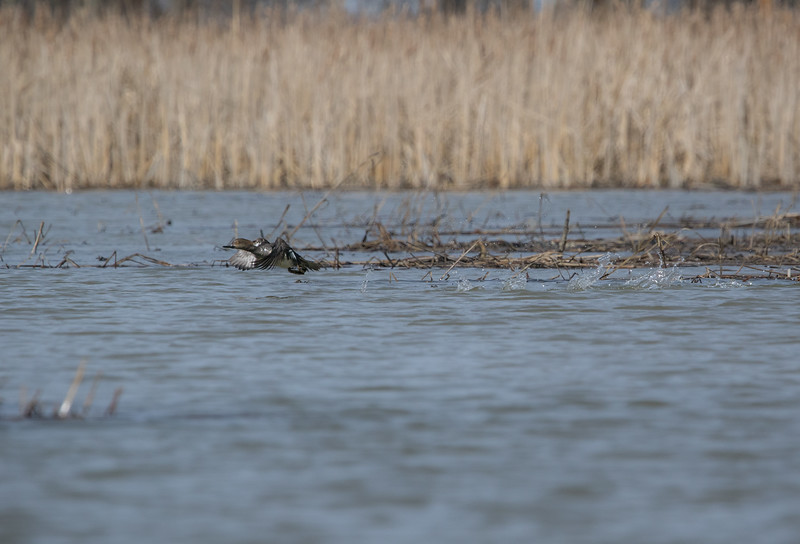
“Skipping duck” is easier to say than “bouncing female hooded merganser”
Summary
This article seems to have become a review of the Pro Angler and that’s because it is the only kayak I’ve ever shot from. However, your needs and/or budget could send you in a totally different direction. If you’re able to do it, test drive the boat you’re going to buy first. Think of how you can twist and turn in it to take photos of things behind you. Also consider how easily you can keep your electronic camera equipment dry while paddling. Sure, there is always a risk when bringing electronics on the water, but that paddle multiplies the risk. Other than that I can absolutely, definitely state that kayak photography is a BIG WIN! It is sooooo worth doing.